
Shares of Procter & Gamble dropped 3.6% in pre-market trading to $143.47 after the company reported fiscal Q4 results this morning that revealed a familiar pattern: earnings per share edged past estimates, but the top line told a grimmer story. Organic sales — revenue stripped of currency swings and deal effects — came in flat, badly missing the roughly 3% growth Wall Street expected. For a stock already down 7% over the past year while the S&P 500 rose 16%, the miss raises a pointed question about whether P&G's premium pricing power is cracking.
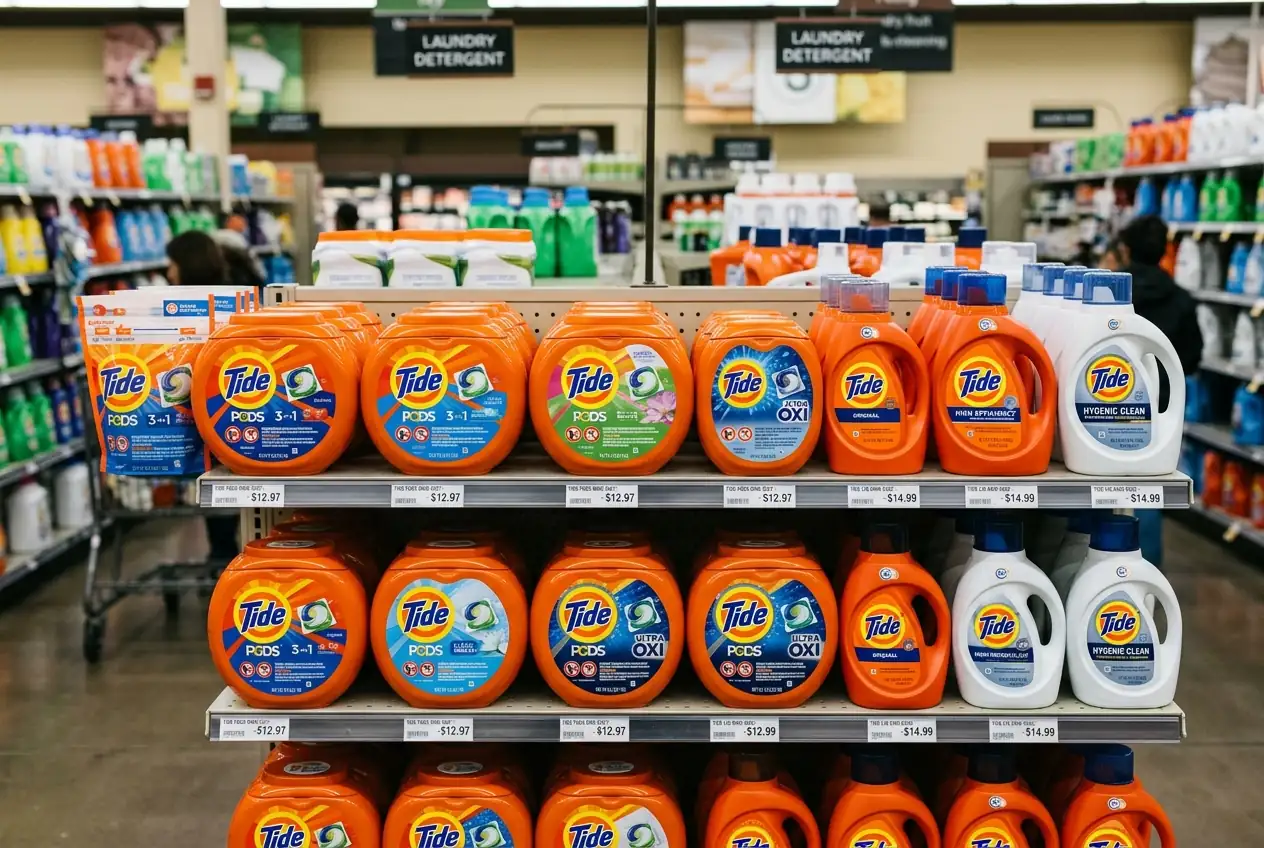
• Flat Sales Signal Consumers Are Trading Down — P&G's products tend to be on the premium side, making it more exposed than many peers when consumers trade down to lower-priced offerings. After posting 3% organic growth last quarter, the sudden stall suggests budget-conscious shoppers are finally balking at premium detergent and diapers. P&G is facing headwinds from about $400 million in after-tax tariff costs, higher oil prices, and inflation, while also contending with private-label competition and smaller rivals, particularly in categories such as diapers.
• The EPS Beat Is a Red Herring — P&G slightly topped earnings expectations, but the beat was driven by cost cuts, not growth. The company is cutting up to 7,000 non-manufacturing roles as part of a two-year restructuring aimed at $2.0 billion to $2.2 billion in productivity savings. You can only squeeze costs so long before you need real revenue momentum to justify a ~$340 billion market cap.
• Guidance Points to More of the Same — P&G now expects fiscal 2026 EPS results to be toward the lower end of the guidance range of $6.83 to $7.09 in core earnings per share. The company highlighted higher commodity costs and tariffs, as well as the impact of higher interest rates. For fiscal 2027, investors wanted a recovery narrative; instead, they got caution.
• The Dividend Is Safe, but That May Not Be Enough — P&G extended its dividend streak to 70 consecutive annual increases, the 136th straight year of payment.
The company plans to return about $15 billion to shareholders in fiscal 2026, split between roughly $10 billion in dividends and $5 billion in share repurchases. That shields the stock from a rout, but income alone won't close a 23-percentage-point performance gap versus the broader market. P&G must prove it can sell more, not just spend less.