
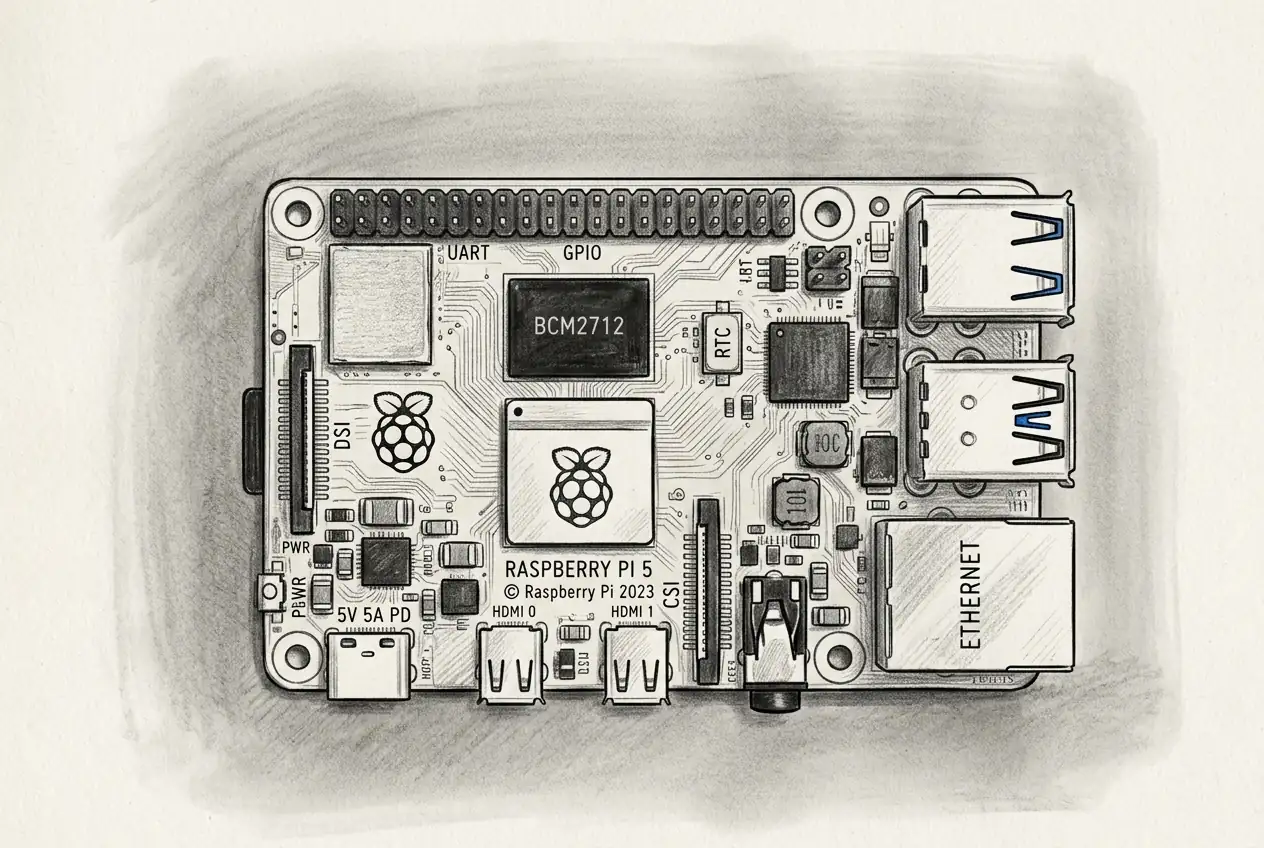
Shares of Raspberry Pi Holdings plunged 13.7% to $8.80 on July 17 after management warned that soaring memory-chip costs will hit 2026 profits and cloud the second-half outlook. The sell-off erased roughly $270 million in market value in a single session and accelerated a slide that has already shaved 22% off the stock over the past week — a brutal reversal for a company whose shares had tripled since January.
- The Problem Is Structural, Not Cyclical. Samsung, SK Hynix, and Micron — controlling over 95% of global DRAM production — have systematically reallocated manufacturing capacity toward high-bandwidth memory chips used in AI accelerators, leaving consumer-grade DRAM in critically short supply.
As of April 2026, the cost of LPDDR4 DRAM used in Raspberry Pi's flagship boards was up sevenfold over the prior year.
New DRAM fabs under construction will not meaningfully add output until 2027 or later — meaning relief is not coming soon.
- The Good Half Is Already Spent. Raspberry Pi reported that H1 2026 trading was strong, with profitability materially ahead of H1 2025, unit sales over 4 million, and adjusted EBITDA of at least $38 million. But that performance was powered by the ongoing use of low-density DRAM inventory accumulated at lower prices throughout 2025.
Unit economics are expected to moderate in H2 as that cheaper memory stock is depleted — meaning the second half will fully absorb current market pricing.
- Price Hikes Risk Killing the Core Customer. The 16GB model, originally launched at $120, now costs $305 — well over double its original price.
Industry observers warn the hobbyist single-board-computer market is "dying — or at least on life support," noting LPDDR chips now account for the majority of board cost. Raspberry Pi's brand was built on affordability; each price increase pushes hobbyists toward used enterprise mini-PCs that now compete on price.
- Industrial Demand Is the Lifeline — but It Has Limits. Industrial customers, which typically account for roughly 70% of Raspberry Pi's demand, provide steadier pricing power.
Management expects full-year 2026 EBITDA to come in significantly above the $42 million analyst consensus. Yet the stock's premium valuation leaves little room for error — if the supply squeeze intensifies in H2, the expectations gap could widen quickly.
The core tension is simple: Raspberry Pi is a small buyer in a market dominated by AI giants that are vacuuming up the world's memory supply. Until new chip factories come online, management is racing against a cost curve it cannot control.