
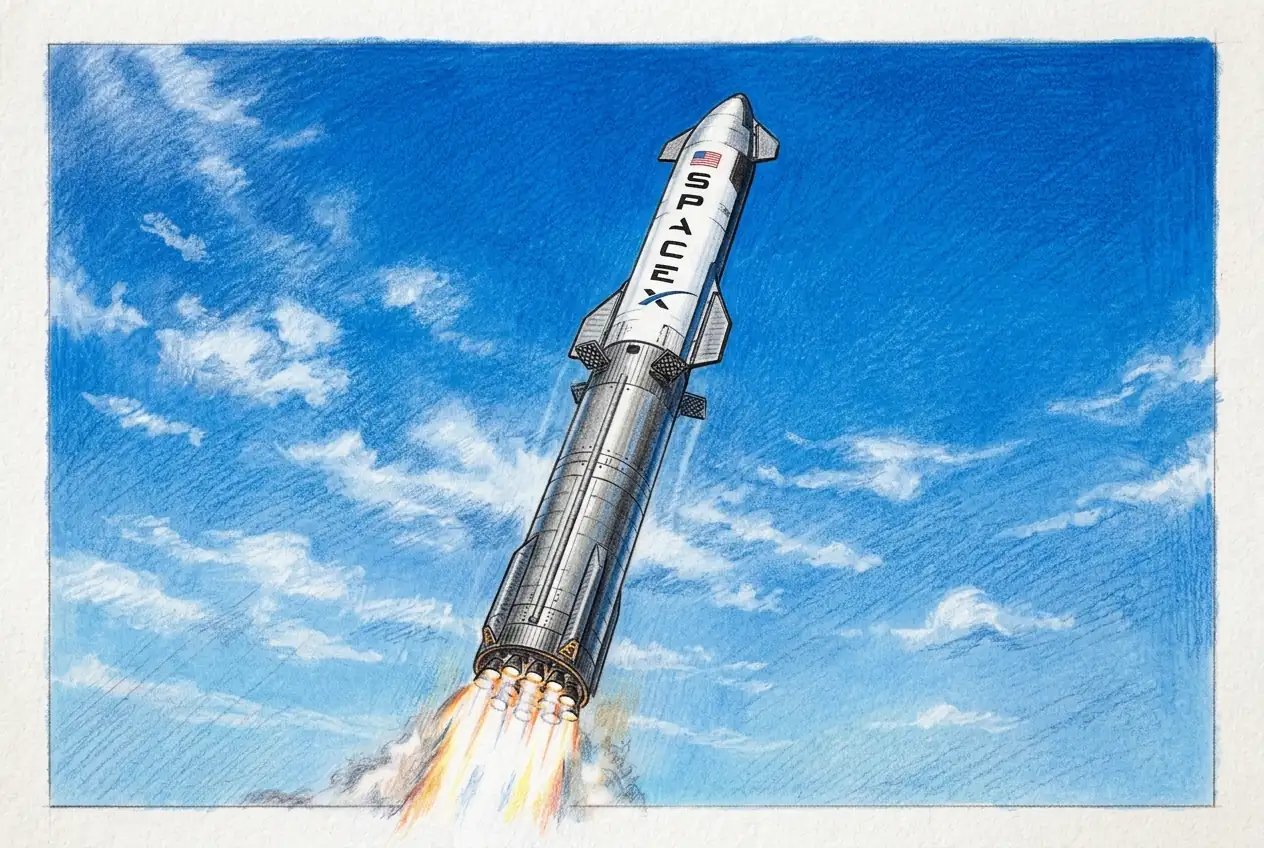
Shares of Virgin Galactic surged 9.5% to $3.01 after SpaceX filed what could become the largest IPO in history, igniting a wave of enthusiasm across commercial space stocks. The rally is real, but the question for SPCE shareholders is whether excitement about someone else's business can paper over their own company's deep financial fragility.
SpaceX's Blockbuster Filing Puts a Spotlight on the Entire Sector
SpaceX filed publicly for what could be the largest-ever initial public offering, under the ticker SPCX on Nasdaq.
According to the Wall Street Journal, SpaceX is seeking to raise $80 billion, valuing the company at $1.7 trillion.
The filing disclosed Q1 2026 revenue of $4.69 billion. That kind of capital flood into the space sector naturally pulls up smaller names like SPCE, which bounced 22% off its $2.47 low in just two sessions. But SpaceX's scale — and its paying customers — are in a different universe from Virgin Galactic's.
Virgin Galactic's Cash Clock Is Ticking Loudly
In its latest quarterly filing, management said its cash outlook raises "substantial doubt" about whether operations can last another 12 months.
Traders are focused on its $93 million negative free cash flow and $251 million cash balance.
The company posted Q1 revenue of just $227,000 — not millions, thousands. At the current burn rate, Virgin Galactic has roughly two to three quarters of runway without raising fresh capital.
The Flight Timeline Is the Only Thing That Matters
Development of its next-generation spaceship has progressed to ground testing, with flight testing planned for Q3 2026 and first commercial spaceflights targeted for Q4 2026, supported by about 650 reservations at $750,000 per ticket. If those milestones hold, that's roughly $487 million in potential booking revenue. But delays could extend the certification process and increase cash burn beyond projections.
Sentiment Can't Replace Solvency
The price-to-sales ratio north of 120 shows traders are paying for hope, not current cash flow.
A market capitalization up to $300 million places SPCE in the micro-cap category — a rounding error next to SpaceX's trillion-dollar ambitions. Jefferies cut its price target from $8 to $5 but kept a Buy rating , reflecting a bet on execution, not today's financials.
SpaceX's IPO gave SPCE a jolt, but borrowed enthusiasm doesn't fix a balance sheet. The next real catalyst is whether a spaceship actually flies this fall.