
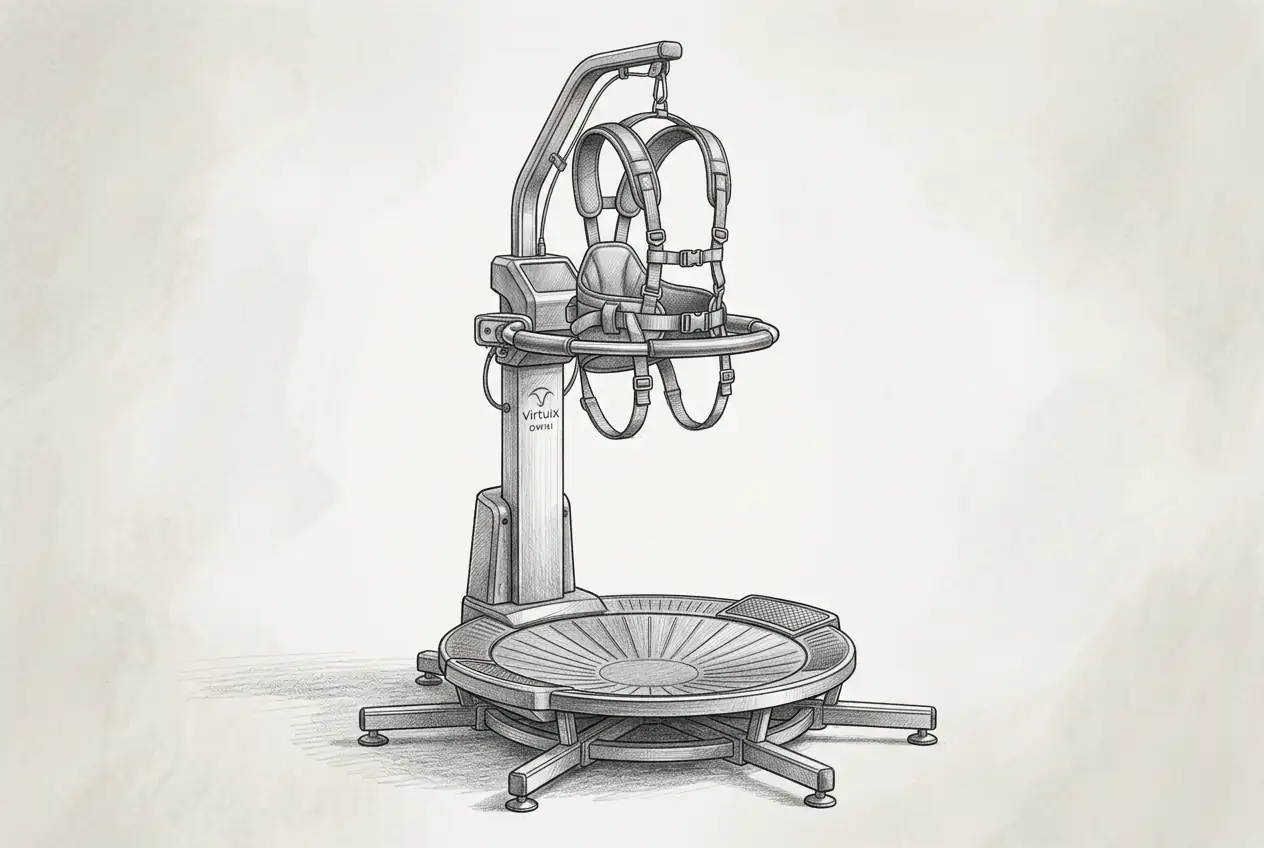
Shares shifted sharply as Virtuix Holdings (VTIX) dropped 6.3% to $3.82 on May 12, the morning after the Austin-based VR treadmill maker filed an SEC Form S-1 registering 25.3 million shares for resale by existing stockholders. The filing threatens to dramatically expand the number of shares available for trading in a stock that only went public in late January — and it landed on a day when broader markets were already reeling from hot inflation data.
• 25 Million New Tradeable Shares Hit a Tiny Stock
Virtuix has roughly 26.35 million shares outstanding , meaning the S-1 registration could nearly double the freely tradeable float if all covered holders sell. For a micro-cap with a market capitalization of just $129 million and an enterprise value of $134 million , that kind of supply shock matters enormously. More shares chasing a thin buyer pool puts relentless downward pressure on price.
• Revenue Is Growing, but the Numbers Are Still Tiny
Nine-month revenue through December 2025 grew 41% year-over-year to $3.0 million , and gross margin swung to 30% from negative territory a year earlier . But trailing twelve-month revenue sits at just $4.46 million, putting the price-to-sales ratio at a steep 28x . The stock's entire investment case rests on future revenue, not today's business.
• The CEO Has Been Selling, Too
CEO Jan Goetgeluk sold 101,609 shares across May 4–5 at prices between $3.50 and $4.04 . Both sales were executed under a pre-arranged trading plan set up before the company's direct listing — which makes them routine, not panic moves — but the optics add to selling pressure alongside the S-1.
• Defense Contracts Are the Bull Case, but Revenue Is Years Away
The board formed a special committee to pursue acquisitions in defense training, targeting companies with $10M–$50M in recurring defense revenue . Virtuix has sold VR systems to the U.S. Army and Air Force and signed a development deal with the Navy . But meaningful defense sales aren't expected until fiscal year 2027 at the earliest , and the company burns roughly $600,000 a month with only about $11.5 million in post-IPO cash — a runway that could tighten fast if an acquisition closes.
The bottom line: Virtuix has a real product and genuine military interest, but a near-doubling of tradeable shares, a lofty valuation on minimal revenue, and insider sales create a toxic cocktail for a stock already trading 96% below its 52-week high of $92.74.