
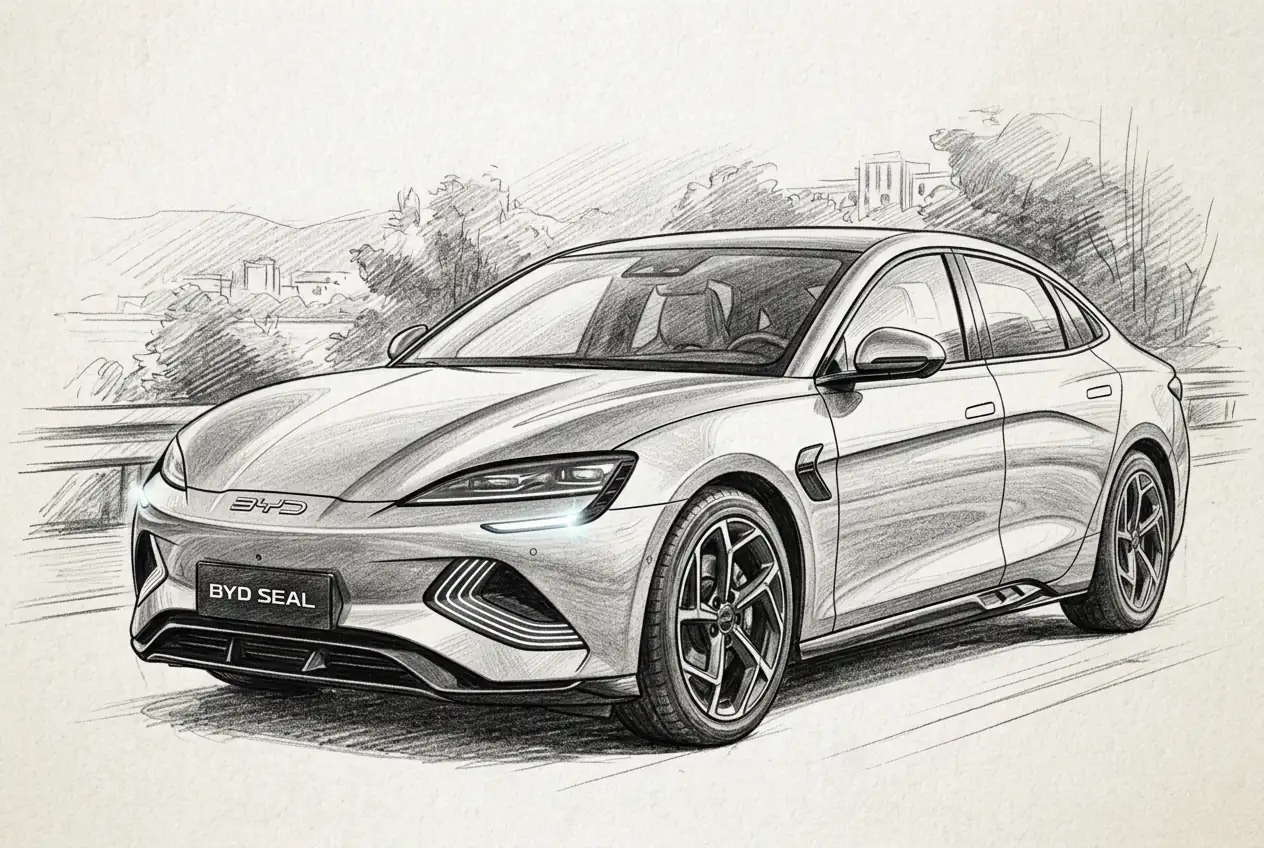
Shares of BYD slid 3.6% to CNY 88.20 on September 1, extending a selloff that began after the company reported a 20.5% drop in first-half net profit on August 28. For investors who bid the stock up on BYD's global expansion story, the results are a jarring reminder that its home market — still the source of most revenue — is bleeding margins. BYD's Profit Drops 20% as China's Price War Grinds On — Can Overseas Growth Save the World's Biggest EV Maker?
Shares of BYD fell 3.6% to CNY 88.20 after the company disclosed a bruising first half: revenue slid 7.1% to CNY 344.8 billion and net profit plunged 20.5% to CNY 12.3 billion. The world's largest electric-vehicle maker is profitable, but the direction of those profits — down for five straight quarters before a partial rebound — raises a pointed question: Is BYD winning the EV price war, or just surviving it?
The Price War Is Eating Margins at Home
Strip out the international business and this is a rough year for BYD in China. First-half domestic deliveries fell nearly 16%, and the price war "did real damage."
Average discounts on BYD vehicles rose to a record 10% in March 2026, according to Bloomberg data.
Net profit margin has compressed from 5.2% in 2024 to 4.1% in 2025 to just 3.6% in the first half of 2026 — a trajectory that erodes the value of every car sold.
Exports Are the Lifeline — and Now the Majority of Revenue
Overseas revenue hit CNY 181.3 billion, up 34%, pushing international sales past 50% of total revenue for the first time.
The overseas business carried a 22% gross margin, nearly two percentage points above its year-ago level , far healthier than domestic returns. BYD has raised its full-year export target to 1.5 million vehicles , but scaling abroad brings currency risk: management blamed foreign-exchange losses as a key drag on first-half profit.
Q2 Rebounded — But Not Enough to Impress Wall Street
Second-quarter net profit jumped 30% to CNY 8.2 billion, ending a five-quarter losing streak and slightly topping the Bloomberg consensus of CNY 8 billion.
Yet the result fell well short of what Morgan Stanley, UBS, and others had penciled in — a roughly 48% gain — making it a meaningful miss for the bulls.
R&D Spending Keeps Rising, Squeezing Near-Term Returns
BYD poured CNY 28.9 billion into research and development in the first half, lifting cumulative R&D spending past CNY 270 billion. That investment funds its next-generation battery technology and autonomous-driving features, but it is money that does not show up in profits today. Cash reserves of CNY 167.4 billion provide a thick cushion, yet investors must decide whether this is a war chest or a cost that never stops growing.