
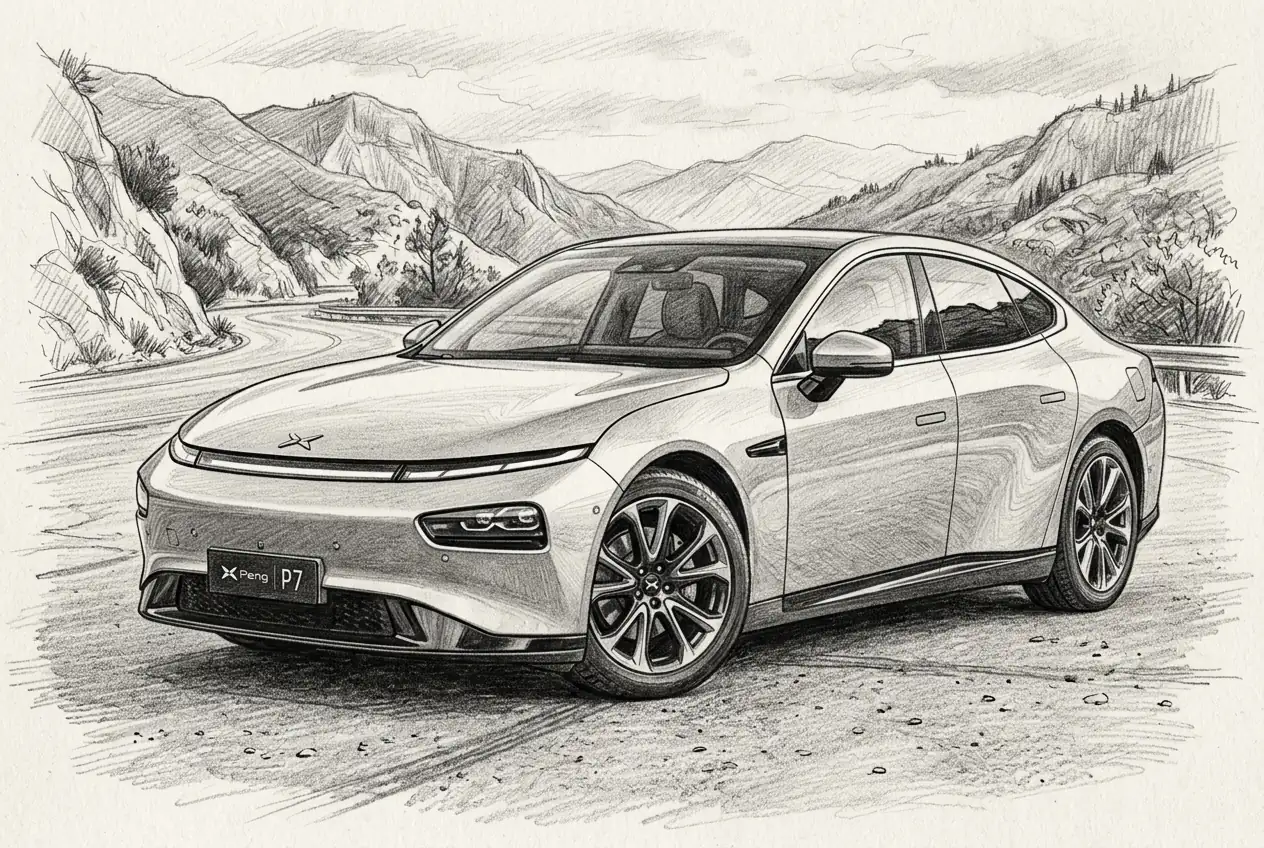
Shares tumbled 6.9% to $11.35 on Monday after Xpeng's second-quarter earnings revealed a widening gap between the company's ambitions and its bottom line, raising hard questions about whether volume growth alone can offset a punishing price war.
Selling More Cars but Making Less Money on Each One
Revenue rose 8% year-over-year to RMB19.74 billion , but that still fell below the RMB20.57 billion consensus estimate. The deeper problem: vehicle margin — the profit Xpeng earns on each car before overhead — narrowed to 12.1% from 14.3% a year earlier.
Net loss ballooned to RMB1.34 billion, compared with just RMB0.48 billion in the year-ago quarter — a 179% increase. EPS came in at ¥-1.29, missing the analyst estimate of ¥-0.29 by a full yuan. Even with deliveries rebounding 65% sequentially, Xpeng is selling into a market where profits evaporate with every discount.
A Weak Forecast Tells the Real Story Third-quarter revenue guidance of RMB21.7–23.4 billion landed far below the RMB26.61 billion Wall Street expected. That shortfall signals management sees no near-term relief. China's EV deliveries fell 3.9% year-over-year in July, extending their decline to a seventh consecutive month , and a record 156 new models are expected to hit the Chinese market in the second half of 2026.
XPEV is already down more than 40% year-to-date , and investors now face the prospect of further estimate cuts.
A $900 Million Robot Gamble Alongside the Earnings Miss Timed alongside the results, Xpeng announced its robotics unit raised over $900 million led by IDG Capital with backing from Tencent and Alibaba, valuing it at over $6.3 billion.
Mass production of its humanoid robot is planned by year-end, with commercial deliveries in 2027. The robotics news is a long-term bet on new revenue streams, but it also underscores that the core car business alone isn't generating enough excitement — or cash — to support the stock.
The Cash Cushion Is Shrinking
R&D expenses surged 46.8% year-over-year in the prior quarter , and robotics spending will add to that burn. Analysts still project profitability by 2027 , but each guidance miss pushes that timeline further out. For shareholders, the math is stark: Xpeng must prove it can grow and protect margins in a market where industry-wide gross profit per vehicle has slipped to about $2,000.